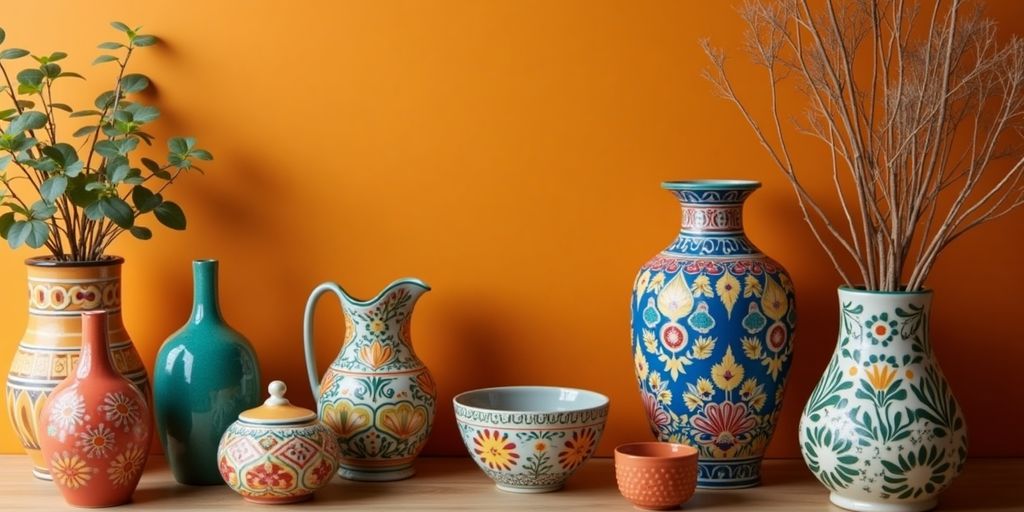
Ceramic & Pottery Items
Blue Pottery (Jaipur)
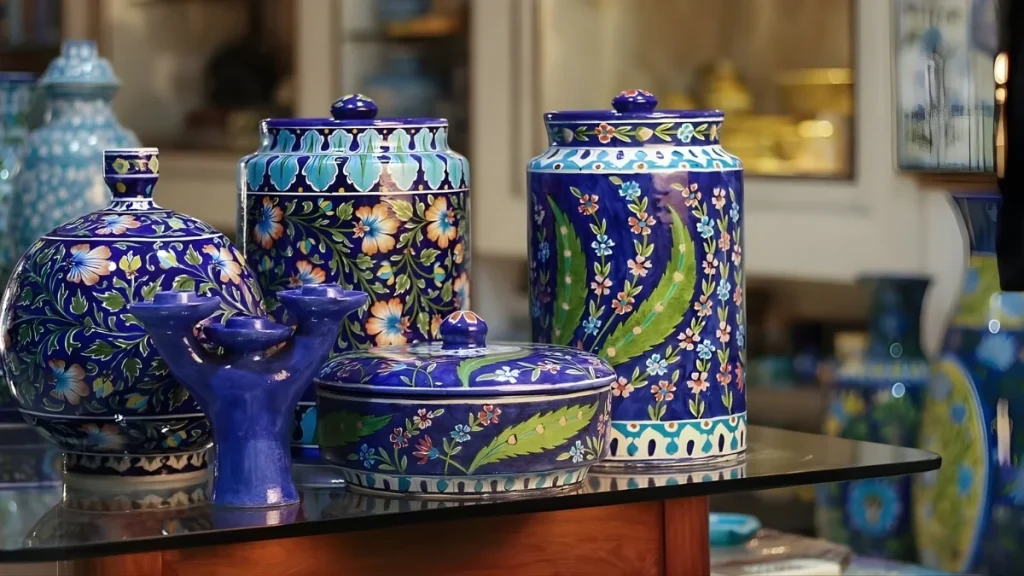
Blue Pottery is a globally recognized traditional craft of Jaipur, renowned for its striking cobalt blue color and unique composition that uses no clay. Instead, it is made from a specialized “dough” of quartz stone powder, powdered glass, and other natural materials.
History and Origin
Originating as a Turko-Persian glazing technique, blue pottery arrived in India with the Turkic conquests in the 14th century and flourished under Mughal patronage. Initially used for tiles in mosques, tombs, and palaces, the technique was introduced to Jaipur in the early 19th century under the rule of Maharaja Sawai Ram Singh II, who sent local artisans to Delhi to be trained.
Terracotta Ware
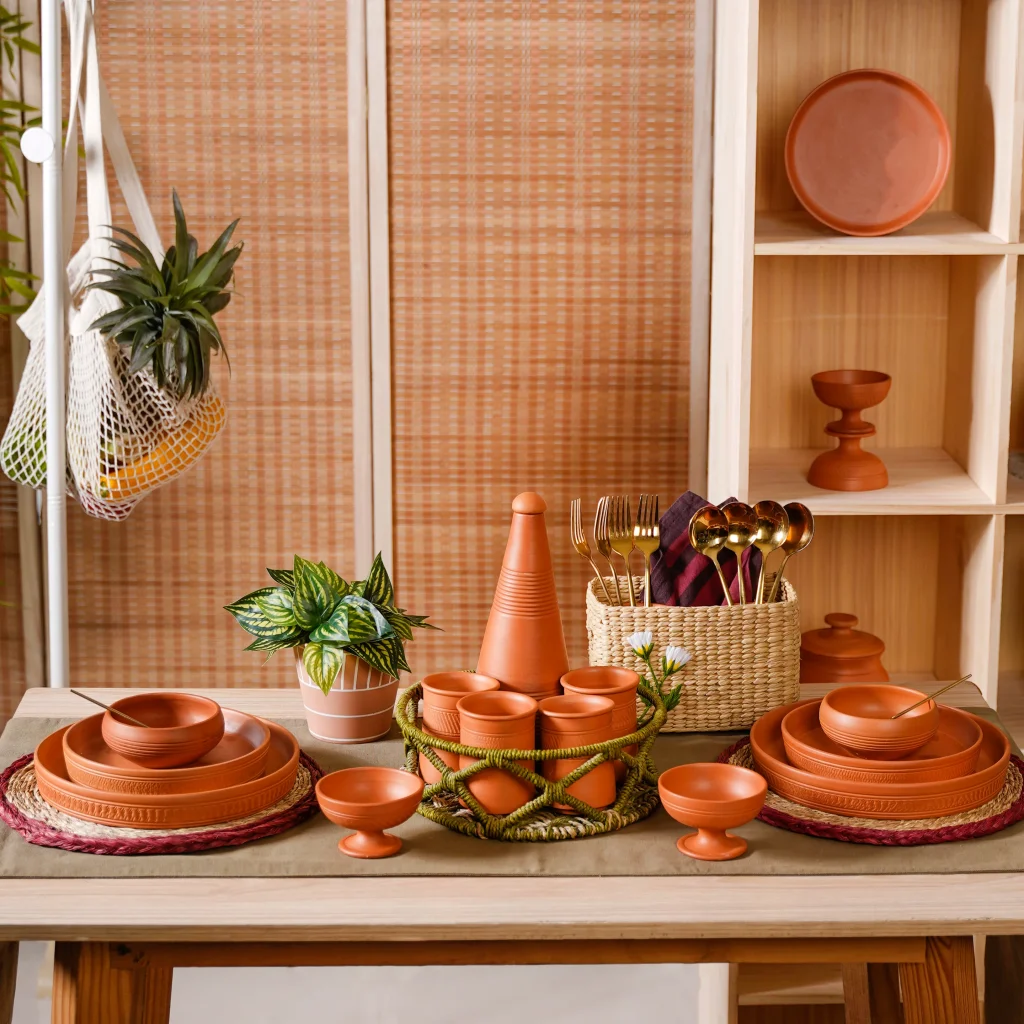
Terracotta ware, or “baked earth,” is a versatile type of clay-based ceramic known for its distinctive reddish-brown color, durability, and porous nature. It has been used for millennia for everything from functional pottery and cookware to architectural elements and art.
Heat Retention: Terracotta absorbs heat gradually and releases it slowly and evenly, making it ideal for slow cooking and keeping food and liquids at stable temperatures for longer periods.
Natural Composition: Made from natural, abundant clay rich in iron and other minerals, terracotta is an eco-friendly and biodegradable material.
Porous Nature: The material is porous, which allows air and moisture to circulate. This is beneficial for plants by preventing overwatering and helps food stay fresh by regulating humidity.
Clay Pots and Decorative Pieces
Clay pots and decorative pieces are ancient, versatile ceramic items made from fired earth. They serve both practical purposes (cooking, storage, planting) and aesthetic functions, offering an earthy, natural appeal to homes and gardens.
Earthenware: Fired at lower temperatures (around 600–1200 °C), earthenware (including terracotta) is porous unless glazed. It is often reddish-brown due to iron content and is widely used for plant pots and decorative items.
Stoneware: Fired at a higher temperature (around 1,100–1,200 °C), stoneware is non-porous and more durable, making it suitable for functional dinnerware, baking dishes, and outdoor art.
Porcelain: Made from fine kaolin clay and fired at the highest temperatures (1,200–1,400 °C), porcelain is known for its strength, whiteness, and translucence, often used for high-end dinnerware and intricate art pieces.