Paintings & Art Forms
Madhubani
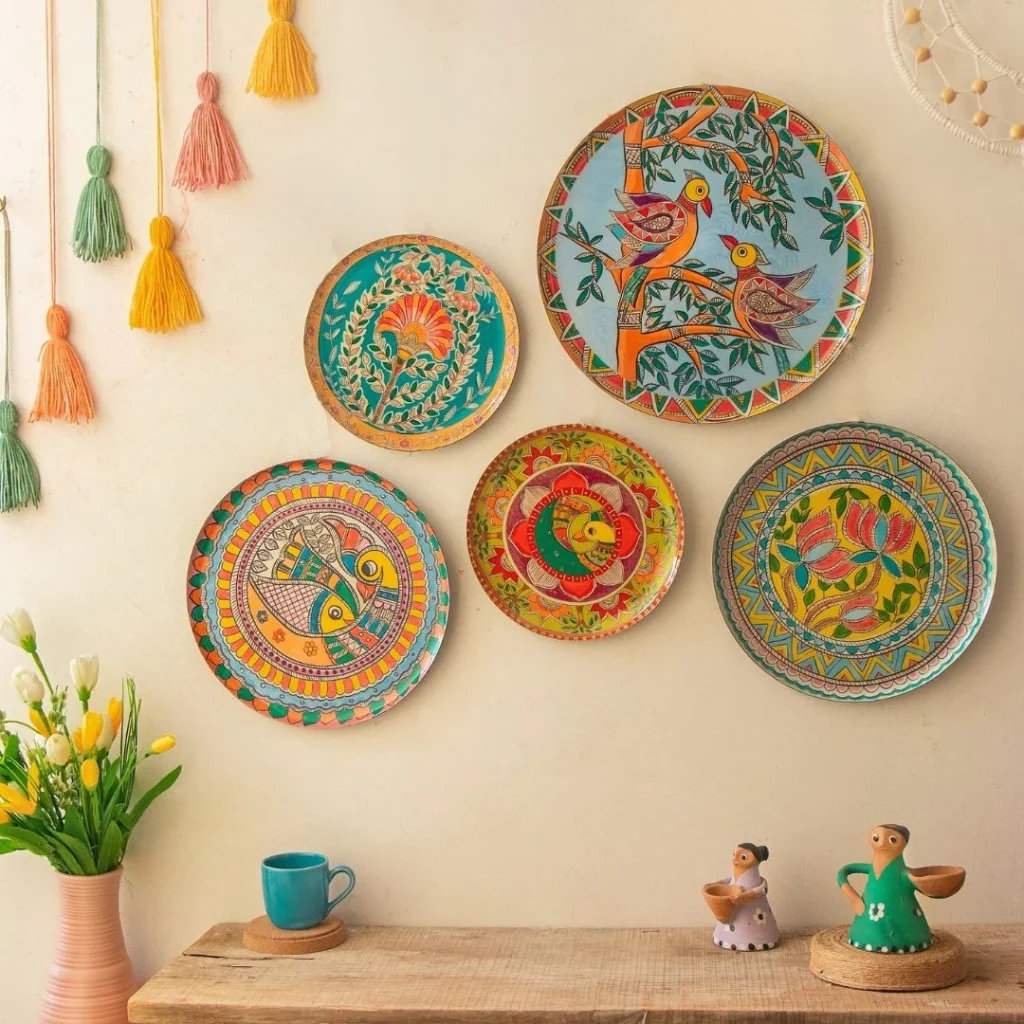
Madhubani primarily refers to a historic district and city in Bihar, India, and its world-famous folk art form, also known as Mithila painting.
Origins: Traditionally practiced by women on mud walls and floors to celebrate births, marriages, and festivals. Legend traces its roots to the Ramayana, when King Janaka commissioned artists to capture his daughter Sita’s wedding to Lord Rama.
Techniques: Artists use fingers, twigs, brushes, nib-pens, and matchsticks. No space is left empty; gaps are filled with floral, animal, and bird motifs.
Styles: Key styles include Bharni, Katchni, Tantrik, Godna, and Kohbar (the latter being traditionally for wedding chambers).
Tanjore
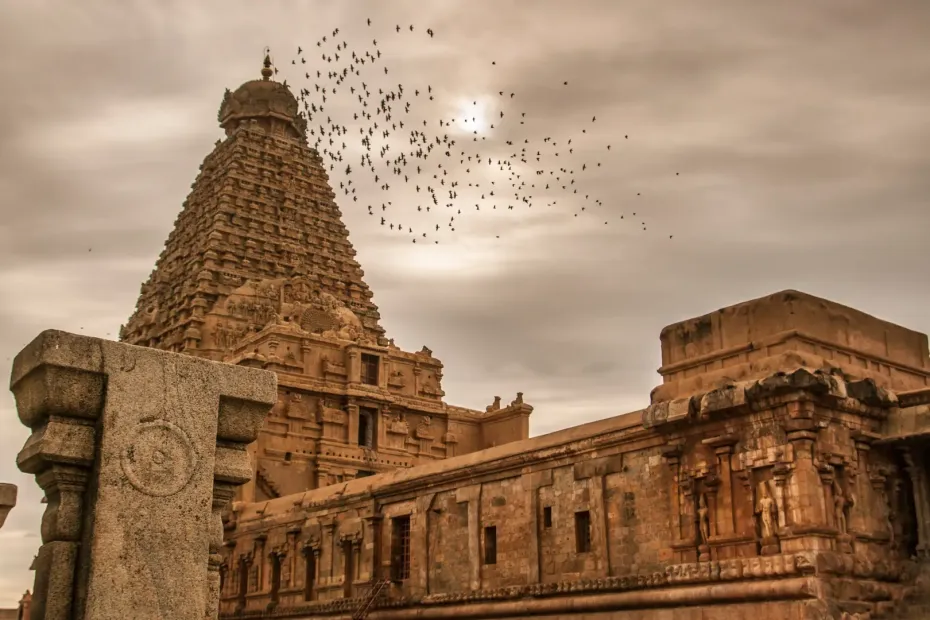
Tanjore (now Thanjavur) is a historic, culturally rich city in Tamil Nadu, India, famous for its stunning Chola-era temples (like the UNESCO-listed Brihadeeswarar Temple), distinctive art (Tanjore paintings with gold foil/gems), architecture, music, and as the “Rice Bowl of South India” due to its fertile delta location
History: A major capital under the Chola Dynasty, later ruled by Nayaks and Marathas, leaving a rich legacy.
Rice Bowl: Situated in the fertile Cauvery Delta, making it a crucial rice-growing region.
Thanjavur Nayaks: Developed the city’s unique artistic traditions.
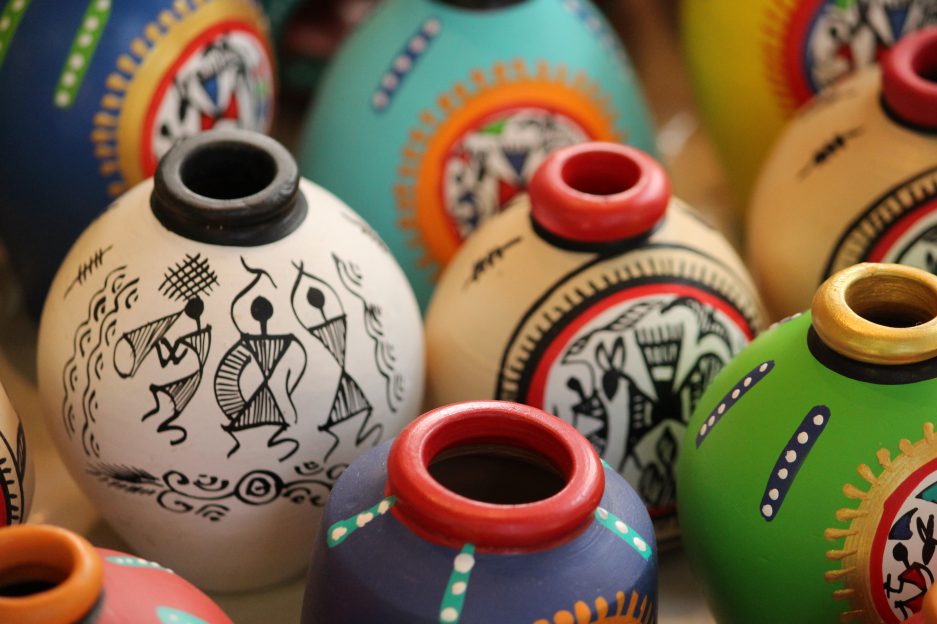
Warli
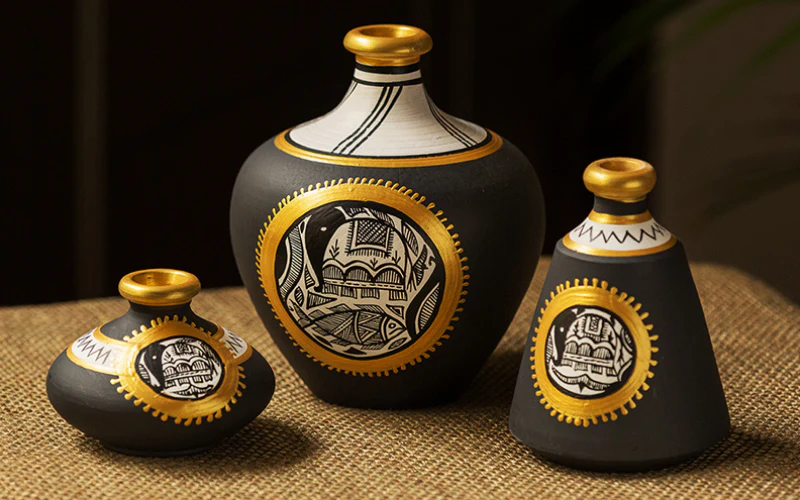
Warli refers to an indigenous tribe (Adivasi) in western India and their world-renowned traditional folk art.
Lifestyle: Traditionally semi-nomadic forest dwellers, most Warli are now settled agriculturists cultivating crops like rice and wheat.
Beliefs: Their culture is deeply animistic, centered on a profound reverence for Mother Nature rather than mythological deities.
Culture: They speak the unwritten Varli language and are known for communal celebrations, particularly the Tarpa dance, where men and women dance in a spiral formation around a musician playing a tarpa (a wind instrument made from a dried gourd).
Pattachitra
Pattachitra is a traditional, cloth-based scroll painting from Odisha and West Bengal, India, where “Patta” means cloth and “Chitra” means picture, depicting rich mythological stories, folklore, and deities like Lord Jagannath with vibrant colors, intricate details, bold outlines, and ornate borders, using natural pigments and traditional methods to tell stories, serving as devotional art and cultural expression for centuries.
Style: Bold, clean lines, intricate patterns, elongated eyes, and vibrant, natural colors.
Color Creation: Pigments are derived from natural sources (e.g., yellow from orpiment, red from geru, black from lampblack).
Themes: Primarily Hindu mythology (Krishna Leela, Ramayana), local legends, and religious narratives.
Kalamkari
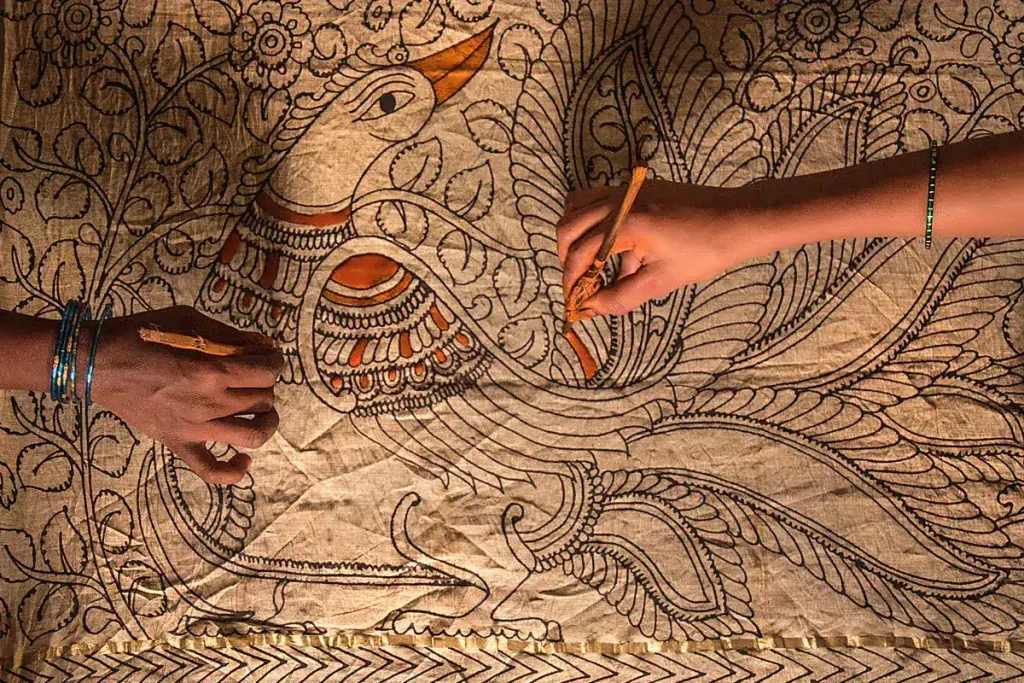
Kalamkari is an ancient Indian art of hand-painting or block-printing intricate designs on cotton or silk textiles using natural, vegetable-based dyes, originating in Andhra Pradesh and Telangana. Derived from Persian words ‘kalam’ (pen) and ‘kari’ (craftsmanship), it depicts mythological stories (Ramayana, Mahabharata) and nature motifs (peacocks, lotuses) with earthy colors and complex processes, primarily in Srikalahasti (hand-painted) and Machilipatnam (block-printed) styles, and is known for its rich cultural heritage.
Technique: Hand-painting with bamboo pens (kalam) or block-printing, requiring multiple washes and natural dyes.
Process: Involves preparing fabric, sketching with a kalam, applying dyes (like indigo, black) using mordants, and extensive washing, sometimes up to 20 times.
Origin & Name: A 3000-year-old craft from Andhra Pradesh/Telangana; “Kalam” (pen) + “Kari” (craft).