
Handcrafted Textiles
Handloom fabrics
Handloom fabrics are textiles woven manually on non-electric looms, valued for their unique artistry, breathability, and sustainable production process. This traditional craft, deeply rooted in cultural heritage, creates one-of-a-kind pieces that are celebrated for their quality and environmental benefits.
Sustainability & Eco-Friendliness: Handloom weaving is an inherently sustainable practice that uses minimal energy (no electricity) and generates little waste Artisans often use natural fibers like cotton, silk, and wool, along with natural or eco-friendly Azo-free dyes.
Uniqueness & Artistry: Each handloom product is a testament to the weaver’s skill, patience, and creativity. Subtle “imperfections” in the weave are not flaws but signatures of the artisan, adding unique character and ensuring no two pieces are exactly alike.
Cultural Preservation & Livelihoods: The industry supports millions of artisans, particularly in rural areas, and helps preserve age-old weaving techniques, patterns, and motifs passed down through generations. By choosing handloom, consumers support these communities and slow fashion principles.
Sarees
(Banarasi, Kanchipuram, Chanderi)
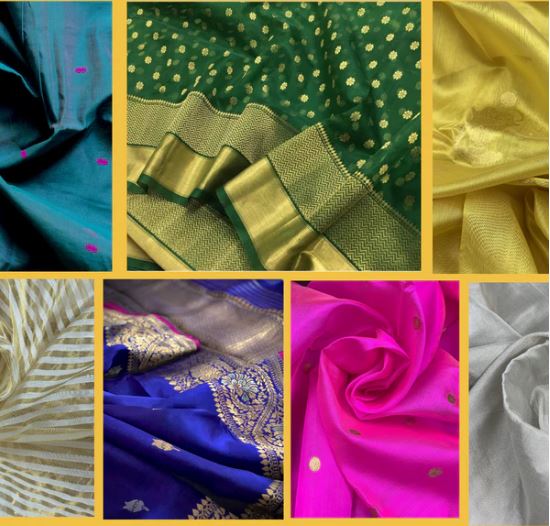
Banarasi, Kanchipuram, and Chanderi sarees are iconic Indian weaves, differing in origin, fabric, and style: Banarasi (Varanasi, UP) is known for rich silk, intricate Mughal-inspired gold/silver zari & brocade; Kanchipuram (Tamil Nadu) for heavy silk, vibrant colors, and temple borders with distinct korvai weave; while Chanderi (Madhya Pradesh) offers light, sheer silk/cotton with subtle zari, perfect for elegance and versatility.
Banarasi Sarees (Uttar Pradesh)
Origin: Varanasi (Banaras), Uttar Pradesh.
Features: Intricate brocade work, fine silk, Mughal-inspired floral/foliate motifs, kalga, bel, and jhallar (fringe) borders.
Kanchipuram (Kanjeevaram) Sarees (Tamil Nadu)
Origin: Kanchipuram, Tamil Nadu.
Features: Thick, pure silk, vibrant colors, iconic contrasting borders, temple designs, peacocks, elephants, and mythological scenes.
Chanderi Sarees (Madhya Pradesh)
Origin: Chanderi, Madhya Pradesh.
Features: Sheer, lightweight fabric with a glossy finish, made from silk, cotton, or a blend.
Pashmina shawls
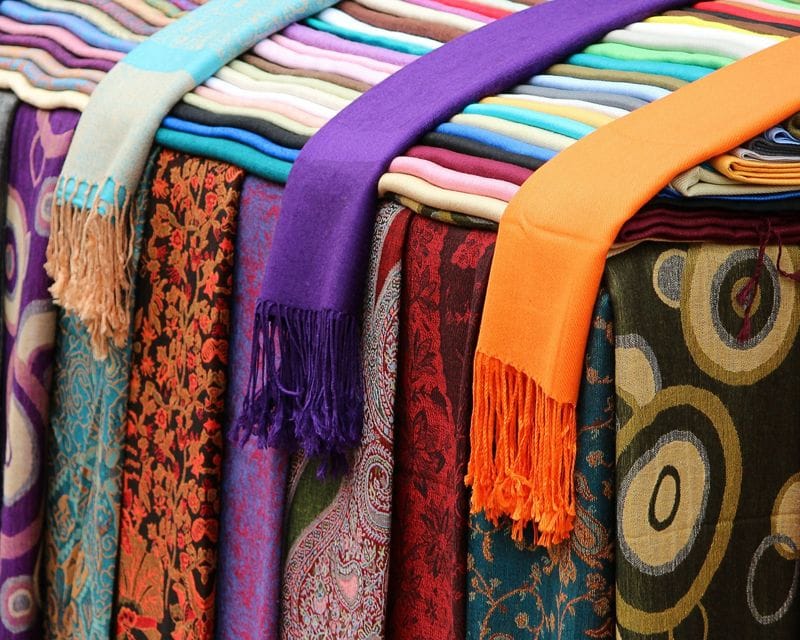
Pashmina shawls are renowned, luxurious accessories made from the ultra-fine cashmere wool of the Changthangi goat, native to the high-altitude Himalayas. Valued for their exceptional softness, lightness, and warmth, they have a rich history as symbols of royalty and status.
Source of Material: The wool, known as “pashm” (Persian for “wool” or “soft gold”), is the downy undercoat that Changthangi goats grow to survive harsh winter temperatures, which can drop to -40°C. In spring, this undercoat is humanely collected by gentle combing, not shearing, by nomadic herders called the Changpa in the Ladakh region.
Handcrafted Process: The entire process, from hand-spinning the delicate fibers on a wooden wheel to hand-weaving on traditional looms, is labor-intensive and performed by skilled artisans, primarily in Kashmir. A single shawl can take weeks or even months to complete, especially if intricate embroidery (like Sozni or Tilla work) or complex Kani weaving is involved.
Exceptional Fineness: Pashmina fibers typically measure between 10 to 16 microns in diameter, which is much finer than human hair (around 100 microns) or even standard merino wool (24–30 microns). This fineness is what gives the shawls their legendary soft, non-itchy feel.
Embroidered textiles (Zari, Zardozi, Kantha)
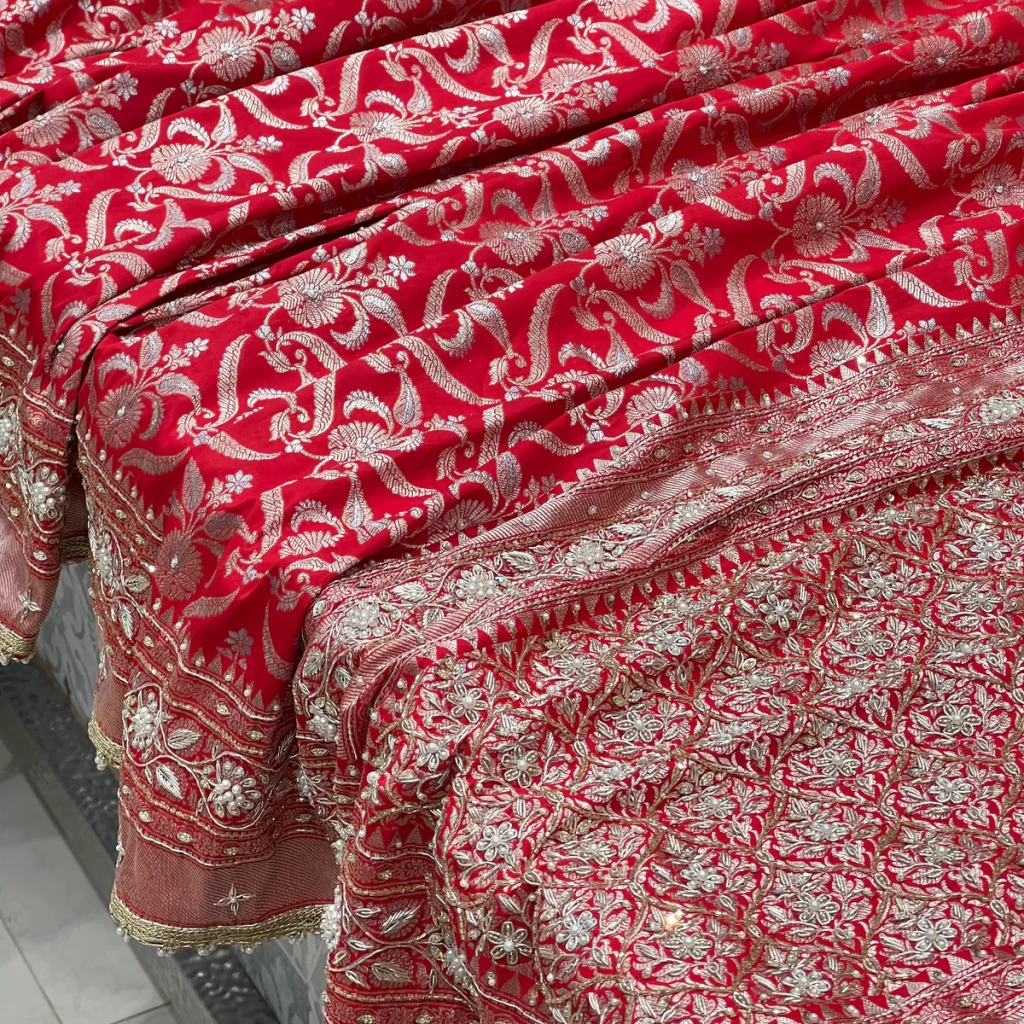
Zari is a traditional thread made of fine gold or silver, used primarily as brocade in weaving or for embroidery. Zardozi (from the Persian words zar meaning gold and dozi meaning embroidery/sewing) refers to the intricate, heavy metallic hand-embroidery that uses this thread.
Origin and History: Zardozi originated in ancient Persia and flourished in India under the patronage of the Mughal emperors, becoming a symbol of opulence and grandeur in royal courts.
Technique: It is a labor-intensive process where artisans sit around a large wooden frame (adda or karchob) to stretch the fabric tightly. They use a hooked needle called an ari to pull the metallic threads through the fabric, creating elaborate designs. Embellishments like pearls, beads, sequins, and semi-precious stones are often incorporated to create a rich, three-dimensional effect.
Motifs and Usage: Traditional motifs are heavily inspired by Mughal art and nature, including floral patterns (jasmine, lotus), leaves, peacocks, and architectural elements. It is used extensively in bridal wear (lehengas, sarees, sherwanis), formal attire, and home decor items like cushion covers and wall hangings.