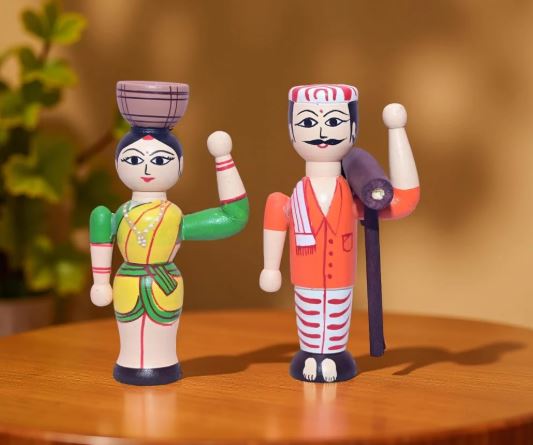
Traditional Indian Toys
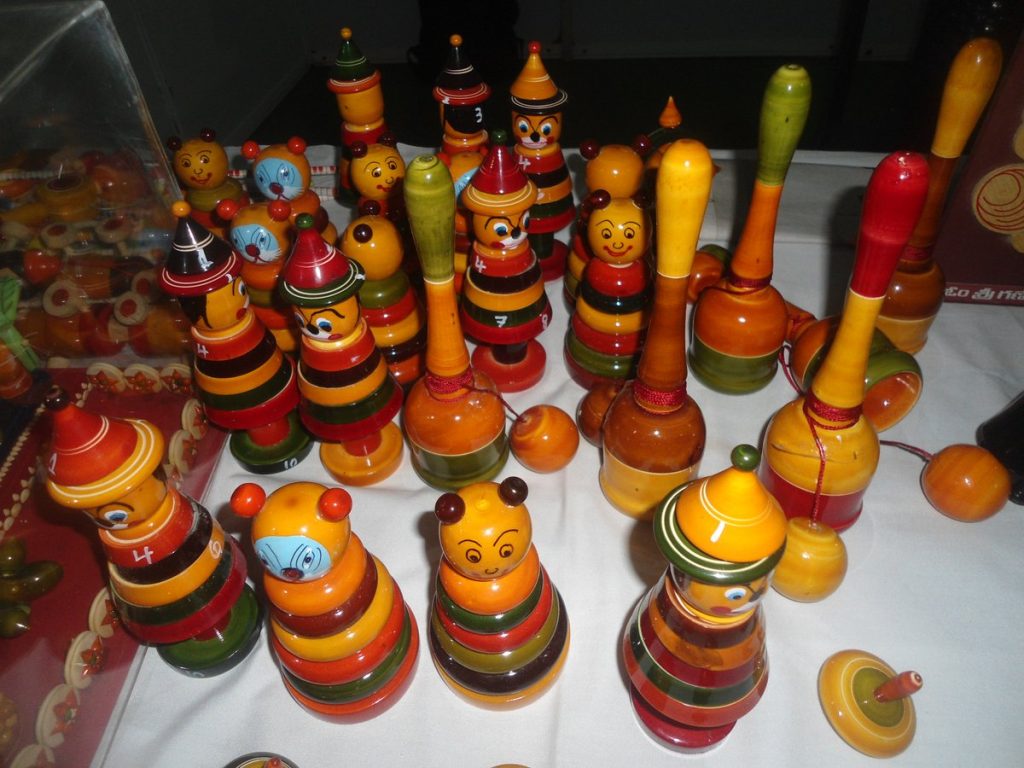
Kondapalli Toys (AP)
Kondapalli Toys, or Kondapalli Bommalu, are traditional Indian wooden handicrafts originating from the town of Kondapalli in Andhra Pradesh, renowned for their lightweight wood and vibrant depiction of rural life and mythology. This 400-year-old craft is a significant cultural marker and has been granted a Geographical Indication (GI) tag.
Online Retailers: A variety of Kondapalli toys can be found on online platforms such as Amazon.in and iTokri.
Skill Development and Marketing: Training programs on using natural colors and modern techniques have been introduced, and efforts are being made to expand market reach through e-commerce platforms and exhibitions to ensure sustainable livelihoods.
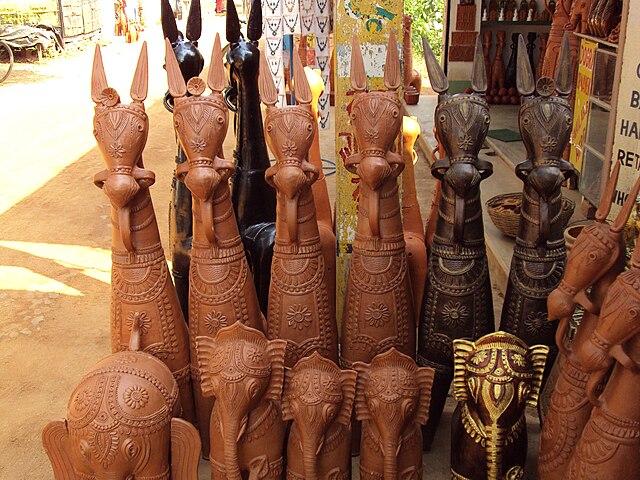
Terracotta Horses & Elephants
Terracotta horses and elephants are iconic symbols of Indian folk art, deeply rooted in regional spiritual traditions and traditional craftsmanship. While they are now popular global home decor items, their origins lie in ritualistic offerings to village deities.
Design: Known for its “elegant stance” and “unique abstraction,” it features an elongated neck, erect ears, and a forehead adorned with Chandmala motifs.
Function: These statues are placed at the entrances of village shrines to serve as mounts for the guardian deity Ayyanar and his spirit warriors.
Gifts: They are considered traditional housewarming gifts representing strength and cultural pride.
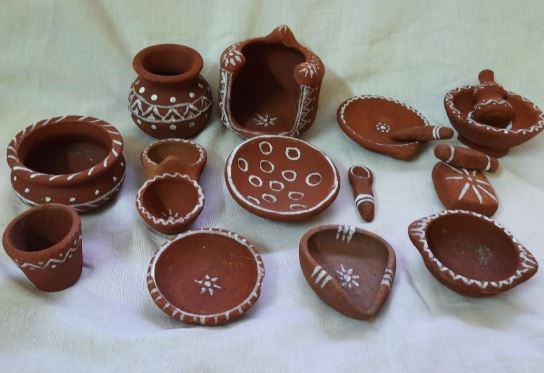
Clay Miniature Sets
Clay miniature sets are used for creative arts and crafts, educational play for children to develop motor skills, and as decorative items for dollhouses or festive displays. They provide a versatile medium for sculpting a wide range of objects.
Clay: Multiple colored blocks or pouches of polymer clay, air-dry clay, or pre-made terracotta items
Accessories & Findings: Depending on the set’s purpose, this might include items like jump rings, earring hooks, or keychains for jewelry making, or googly eyes and decorative elements for simple crafts.
Skill Development: They help improve fine motor skills and hand-eye coordination through hands-on manipulation and intricate detailing.
Traditional Dolls
Traditional dolls are culturally significant artifacts, often handmade from local materials like wood, clay, and textiles, that serve as toys, ritual objects, and storytellers of a community’s heritage. They reflect the unique history, clothing, and customs of different regions around the world.
Wood: A common material in many cultures, including Japanese Kokeshi dolls and Indian Channapatna and Kondapalli toys. Specific woods like ivory wood, mango wood, and walnut wood are used, with non-toxic vegetable dyes often applied for color.
Protection and Good Fortune: Some dolls are considered protective amulets or good luck charms. Akuaba dolls from the Ashanti people in Ghana are wooden fertility dolls. Daruma dolls in Japan are used for goal setting and good fortune.